
BBC One
Featured Show:
By the Sea
By the Sea, is a 1982 BBC film starring The Two Ronnies, and written by Ronnie Barker under the pseudonyms "Dave Huggett and Larry Keith". The film followed the extended family of "The General", played by Barker, as they went on an eventful seaside holiday. It was set on the Dorset coast in "Tiddly Cove", actually the coast between Bournemouth and Swanage. Ronnie Barker was a keen collector of saucy seaside postcards, and published several books of them. The humour of By the Sea was very much based on the colourful style of these.
BBC One TV Shows
2572 shows • Page 129 of 129
 0
0By the Sea
By the Sea, is a 1982 BBC film starring The Two Ronnies, and written by Ronnie Barker under the pseudonyms "Dave Huggett and Larry Keith". The film followed the extended family of "The General", played by Barker, as they went on an eventful seaside holiday. It was set on the Dorset coast in "Tiddly Cove", actually the coast between Bournemouth and Swanage. Ronnie Barker was a keen collector of saucy seaside postcards, and published several books of them. The humour of By the Sea was very much based on the colourful style of these.

Why Don't You?
Why Don't You? or Why Don't You Just Switch Off Your Television Set and Go and Do Something Less Boring Instead? was a BBC children's television series broadcast in 42 series between 20 August 1973 and 21 April 1995. It usually went out on weekday mornings during the Christmas and Easter school holidays, although some early series in the 1970s were broadcast on Saturday mornings. The format consisted of groups or "gangs" of children responding to letters from viewers who wrote into the show suggesting games, 'makes' and days out. Typically these were arts-and-crafts activities involving cutting up paper, or games and magic tricks children could learn to impress their friends. Created by producer/director Patrick Dowling at the BBC's Bristol studios, Russell T Davies was later at one time a producer and director for Why Don't You...? before going on to greater fame as writer of Queer as Folk and producer of the 2005 revival of Doctor Who. Under Davies's direction, the format of the series shifted from magazine show to drama, with plots frequently centring around harebrained young Welsh presenter Ben Slade and his increasingly elaborate inventions. Slade was one of the longest serving presenters in the show's 22 year run.
0Bitsa
Bitsa was a British television programme broadcast from 1991 to 1996 on BBC 1. It involved creative arts and "makes" very much like later show SMart. It was repeated for a time on the now defunct digital channel BBC Choice. The show featured two presenters who would create craft projects from household junk and craft materials. Sometimes the items created were quite complex and advanced, but were always presented with instructions for viewers to follow. The show also featured a 'challenge' section, in which school children would shout three numbers corresponding to a selection of numbered boxes, each containing a different material, for example cardboard tubes, sticks or fabric. The presenters would then have three minutes to create something using only these materials. Much fervent use of a glue gun often ensued. The theme tune for Bitsa was written by Peter Charlton and the original musical arrangement was by Bill Le Sage, but after the first series the tune was reworked by Mark Reader from the rock band Strider. Reader also wrote the music for the 3-minute challenge and composed all the rest of the music for the show. Other items featured on the show included clips of children presenting craft projects they had made themselves, and footage of the presenters travelling around the country in their van visiting local schools. There was also a robotic puppet named 'Hands' who would quickly make a small item, often mechanical in nature, from small items such as pieces of card, elastic bands or matchboxes, who would hum as he worked, then present the completed item with a flourish.
0That's Genius!
That's Genius! was a BBC children's television series originally shown on BBC One between 12 November 2003 and 17 December 2003. The program ran for one series. Earlier in 2003 CBBC announced a competition for children to send in their ideas for inventions. The competition attracted nearly 3000 entries of which a panel of judges chose the top five. These five inventions were then made into prototypes by experts. On 17 December 2003 viewers were invited to vote for their favourite invention and then the winner was announced live on BBC One. The winner won a behind the scenes tour at the Epcot Center. The show was presented by Angellica Bell, Kursty Groves and Steve Wilson.
0BBC Nine O'Clock News
The BBC Nine O'Clock News was the flagship BBC News programme. It was launched on 14 September 1970 and ran until 15 October 2000, when it was controversially replaced by the BBC Ten O'Clock News.
Me Mammy
Me Mammy is a British sitcom that aired on BBC1 from 1968 to 1971. Starring Milo O'Shea, it was written by Hugh Leonard.
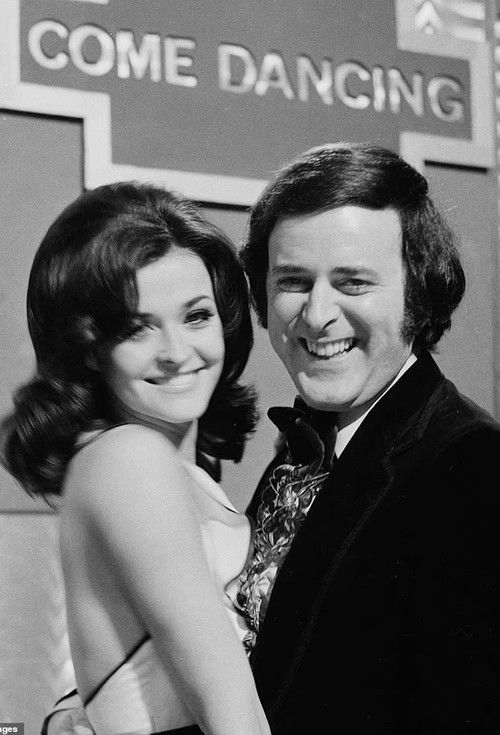
Come Dancing
Come Dancing was a BBC TV ballroom dancing competition show that ran on and off from 1949 to 1998, becoming one of television's longest-running shows. The show was created by Eric Morley, the founder of Miss World, and began in 1949 by broadcasting from regional ballroom studios, with professional dancers Syd Perkin and Edna Duffield on hand to offer teaching. In 1953 the format changed to become a competition, with later series seeing regions of the United Kingdom going head to head for the coveted trophy. The many presenters over the years included Peter West, McDonald Hobley, Charles Nove, Terry Wogan, Brian Johnston, Angela Rippon, Michael Aspel, Noel Edmonds, David Jacobs, Judith Chalmers, Pete Murray, and Rosemarie Ford. Commentators included Ray Moore and Bruce Hammal. In 2004, a re-launched celebrity version entitled Strictly Come Dancing, hosted by Bruce Forsyth and Tess Daly, debuted on BBC One, and became a popular hit on Saturday evenings. The format of the newer show has been successfully exported to other countries under the name Dancing with the Stars.

Newsround
Newsround is a BBC children's news programme, which has run continuously since 4 April 1972, and was one of the world's first television news magazines aimed specifically at children. Initially commissioned as a short series by BBC Children's Department, who held editorial control, its facilities are provided by BBC News. The programme is aimed at 6 to 16-year-olds.
Breakfast Time
Breakfast Time is British television's first national breakfast show, broadcast from 17 January 1983 until 1 September 1989 on BBC1 across the United Kingdom. It preceded TV-am, the commercial breakfast television station with their programme Good Morning Britain, to the air by two weeks and one day.
0Rag, Tag and Bobtail
Rag, Tag and Bobtail was a BBC children's television programme that ran from 1953 to 1965 as the Thursday programme in the weekly cycle of Watch With Mother. The scripts were written by Louise Cochrane, and the series was produced by Freda Lingstrom and David Boisseau. Narration was by Charles E. Stidwell, David Enders, and James Urquhart. The three main characters were Rag, a hedgehog; Tag, a mouse; and Bobtail, a rabbit; five baby rabbits also appeared occasionally. All the characters were glove puppets, operated by Sam and Elizabeth Williams. The stories were simple and there were no catch-phrases as there were in other programmes in the cycle, but the series is still remembered with affection. Twenty-six 12-minute episodes were made, two of which were never broadcast, each shot in a single take. In 1987, a Watch With Mother video was released by the BBC. The episode of Rag, Tag and Bobtail featured a scene in which Bobtail discovered that the baby rabbits had been playing in a muddy pool and had turned black. He was unable to clean them, but in the end the mud was washed off.
0Castaway 2007
Castaway 2007 was a follow-up to the BBC series Castaway 2000 in which a group of people from the British public are "castaway" on a remote island. While in the 2000 series 36 men, women and children moved to a remote Scottish island for a year, this series featured 15 men and women from the British public who were moved to a New Zealand island for three months. The basic premise of a group of volunteers living as a community in a remote location remains, however this time the BBC promised an "exotic location, on the other side of the world". Another change since Castaway 2000, was that the castaways were voted off the island one-by-one, in a manner similar to other reality series like Big Brother. The prize for the winning castaway, which was Jonathan, was a trip around New Zealand with a friend later in the year.

Sportscene
Sportscene is the name of a range of Scottish sports television programmes produced by BBC Scotland. Its main anchor is Stephen Thompson. Previous Sportscene presenters include David Currie, Rob MacLean, Alison Walker, Richard Gordon, Dougie Donnelly, Archie Macpherson, Gordon Hewitt, Hazel Irvine, Jill Douglas, Mark Souster and Jim Craig. Recent notable events covered by Sportscene include Celtic's run to the UEFA Cup Final in the 2002-03 season, Scotland's 2006 Six Nations triumph over England and the finale to the 2002-03 Scottish Premier League season.