
BBC One
Featured Show:
The Disorderly Room
The Disorderly Room was a very early British television comedy production, written by Eric Blore and starring Tommy Handley. Blore was also an actor who played roles such as butlers in various Hollywood films, while Handley later found greater fame in the BBC radio comedy show It's That Man Again. The Disorderly Room was first performed on stage at the Victoria Palace Theatre, in 1919 and starred Blore, Stanley Holloway, Tom Walls, Leslie Henson and Jack Buchanan. The show was a one-off piece which consisted of a single sketch, wherein army disciplinary proceedings were put to the tunes of various popular songs of the day. It was first performed live on the BBC Television Service on Saturday 17 April 1937, in a fifteen-minute form at 3.45pm. Such was its popularity, however, that the production was re-staged on various occasions before the suspension of the flegdling television service for the duration of the Second World War in September 1939. The later performances on 30 August 1937; 23 December 1937; 15 August 1939 and finally on 20 August 1939. None of these has survived because the technology to record them did not exist at the time of their broadcasting; the sole surviving remnants are still photographs.
BBC One TV Shows
2572 shows • Page 125 of 129
 0
0The Disorderly Room
The Disorderly Room was a very early British television comedy production, written by Eric Blore and starring Tommy Handley. Blore was also an actor who played roles such as butlers in various Hollywood films, while Handley later found greater fame in the BBC radio comedy show It's That Man Again. The Disorderly Room was first performed on stage at the Victoria Palace Theatre, in 1919 and starred Blore, Stanley Holloway, Tom Walls, Leslie Henson and Jack Buchanan. The show was a one-off piece which consisted of a single sketch, wherein army disciplinary proceedings were put to the tunes of various popular songs of the day. It was first performed live on the BBC Television Service on Saturday 17 April 1937, in a fifteen-minute form at 3.45pm. Such was its popularity, however, that the production was re-staged on various occasions before the suspension of the flegdling television service for the duration of the Second World War in September 1939. The later performances on 30 August 1937; 23 December 1937; 15 August 1939 and finally on 20 August 1939. None of these has survived because the technology to record them did not exist at the time of their broadcasting; the sole surviving remnants are still photographs.
Inside Story
A BBC documentary film strand, with the focus on investigative journalism.
Sin on Saturday
Sin on Saturday was a British live, late-night chat show based on the theme of the seven deadly sins. It was produced by BBC Scotland, but it was pulled from the schedules after only three broadcasts. Originally, the show was to broadcast eight episodes. The first seven were to be based on each of the deadly sins, and the eighth one intended to round off the series by talking about being caught sinning. The show was hosted by Bernard Falk and also featured comedy sketches and musical interludes. It included a memorable appearance by the actor Oliver Reed who interrupted an interview with a nun on the edition entitled ‘lust’. In 1992 the show was featured on a 'TV Hell' theme night broadcast on BBC Two.
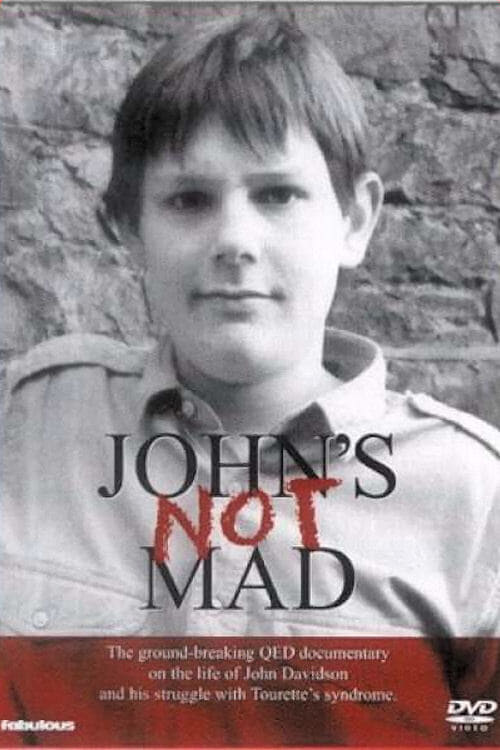
John's Not Mad
John's Not Mad is a QED documentary made by the BBC in 1989. It was ranked, in a British public poll, as one of the 50 Greatest Documentaries. The film shadows John Davidson, a 15-year-old from Galashiels in Scotland, who had severe Tourette syndrome. John's life was explored in terms of his family and the close-knit community around him, and how they all coped with a misunderstood condition.
0Missing Live
Missing, titled Missing Live from 2008–2010, is a BBC One morning television series which has been running since 2005. It is currently presented Louise Minchin and Rav Wilding, who replaced Sally Magnusson in 2008. The fifth series adopted a live studio style as opposed to the pre-recorded, docu-drama, style of the previous series. The seventh series returned to the original style and was pre-recorded and presented solely by Louise Minchin.
0Runaway
Runaway is the story of a young boy who takes to the streets to get away from the torment he suffers at school and daily problems at home. Life at home is rife with daily doses of scoldings from his half-drunk mother, and his two younger brothers Dean and Jack pay him scant attention until noticing he is missing. On his journey, Sean meets a girl named Molly who takes him to a crumbling mill where her family lives. The series follows the police search for Sean, and how his disappearance affects his family. Runaways was part of a short season on CBBC about children and homelessness, along with a 5-part documentary "Sofa Surfers". The program was first shown as three separated half-hour episodes in March 2009, and later as an 82-minute film.
Good Morning with Anne and Nick
Good Morning with Anne and Nick is a British daytime television show presented by Anne Diamond and Nick Owen, broadcast on BBC1 from October 1992 to May 1996. The pair had previously presented TV-am, but now directly competed with ITV's This Morning. The show was broadcast from BBC's Pebble Mill Studios in Birmingham.
0Tiny and Mr Duk
Tiny and Mr Duk were two puppet characters created for UK children's TV show, The Saturday Show by Dave Chapman and Damian Farrell.
Hotel Trubble
Hotel Trubble is a children's comedy drama made by the BBC and broadcast on its television channels CBBC and BBC One. It stars Dominique Moore as Sally, the receptionist; Gary Damer as Lenny; Sam Phillips as Jamie, the bellboy; and Tanya Franks as Dolly and Sheila Bernette as Mrs. Poshington, a guest who never leaves. It is a farce sitcom. A total of 39 episodes have aired on TV between December 2008 and August 2011.. Many guest stars have appeared, including Tom Price, Josie d'Arby, Miranda Hart, Stephen Evans, Steve Furst, Steve Marsh, Dan Wright, Les Dennis and Phil Cornwell.
 0
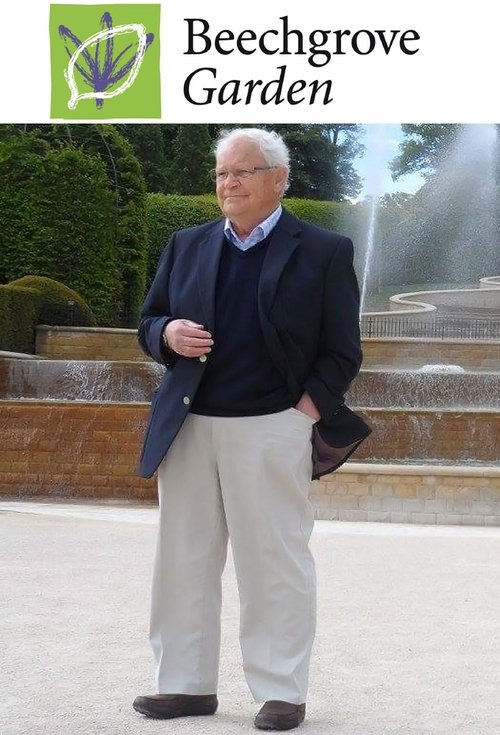
0The Beechgrove Garden
Gardening show that celebrates Scottish horticulture and growing conditions.
It'll Never Work?
It'll Never Work was a TV program for children showcasing new inventions and developments in scientific technology. Produced by Roy Milani for BBC Children's, the show ran for seven series between 9 November 1993 and 23 August 1999 on weekdays within the Children's BBC, later CBBC, strand on BBC One.
Breakfast News
Breakfast News was a breakfast news show which first aired on BBC1 on 2 October 1989. The programme was previously known as Breakfast Time. It was planned to launch on 4 September 1989 and again on the 18 September but was held back due to technical issues with its new studio The programme went through three main visual changes. The initial look lasted from launch in 4 September 1989 to 12 April 1993. The 13 April 1993 revamp saw the programme presented from the same set as the One, Six and Nine O'Clock News bulletins. A further and final revamp took place in June 1997 when 'BBC' was shorn from its title, and on-screen it became known as simply Breakfast News. It was during this final period that the tone began to shift, with the return of a sofa set, alongside more features, and more interaction between the presenting team. The final edition of Breakfast News aired on 15 September 2000, and on 2 October 2000 it relaunched as BBC Breakfast.
0Eureka TV
Eureka TV is a British children's television series about science that ran from 2001 to 2005 on the children's TV channel CBBC.
0Coming Down the Mountain
Coming Down the Mountain is a 2007 British television film which was shown on BBC One, written by Mark Haddon and directed by Julie Anne Robinson. The television film was based on a radio play also written by Haddon.
0Whizz Whizz Bang Bang
Whizz Whizz Bang Bang is a BBC television series that started 5 March 2007. The show is presented by Greg Foot. It features a different child in each programme who has an invention idea and then the team, with the help of Ralph, tries to build it. Most attempts have been successful, although all ideas have had to be slightly changed to make them practical. Inventions have included a hover scooter, a hydraulic off road wheel chair, basketball launcher, jet engine bed and an Air Guitar.
0Rogue Traders
Rogue Traders was a prime-time BBC One presenter-led investigative consumer affairs television series starring Matt Allwright, an investigative journalist and presenter and his side-kick, Dan Penteado who also works as a private investigator around Europe and the UK. Rogue Traders began in 2001 and has run for nine series on BBC One. Allwright and Penteado film and script much of the series themselves, resulting in an improvised, 'on the hoof' feel to the show. An occasional catchphrase used during the show is "We never give up." Since 10 September 2009, a new one-hour revamp of the consumer-affairs programme Watchdog began airing, incorporating Rogue Traders as a segment of the show.
The Other Half
The Other Half was a dating game show on BBC One, which ran from 7 June 1997 to 2 February 2002. It was hosted by Dale Winton who is known for his fame in Supermarket Sweep.
The Chinese Puzzle
The Chinese Puzzle is a British six-part children's adventure series, first broadcast on BBC1 in 1974. It was the brainchild of prolific British television writer, Brian Finch, and features "two friends who stumble into a complex plot involving kidnapping and blackmail".
 0
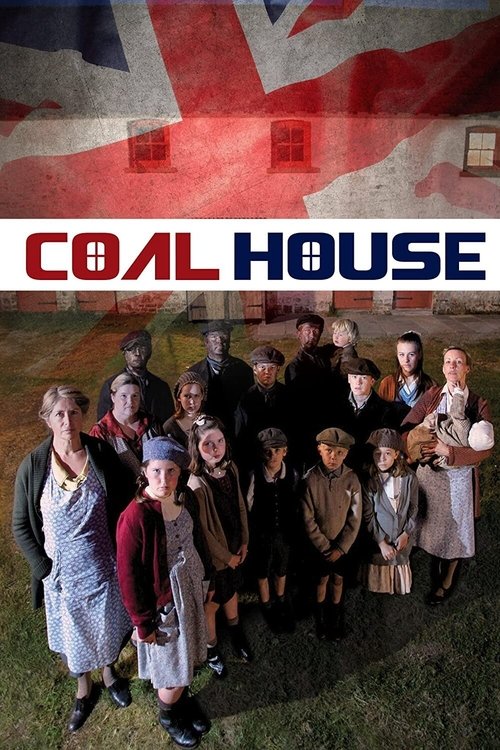
0Coal House
Coal House is a Welsh television series made by Indus Films for BBC Wales, and broadcast on BBC One Wales, with a subsequent UK wide repeat of both series on BBC Four. Series 1 was set in the depressed economic coalfields of 1927, while Series 2 was set in 1944 as World War II draws to a close. Series 2 was broadcast on BBC across the UK from October 2009
Breakfast with Frost
Breakfast with Frost was a BBC current affairs television programme hosted by Sir David Frost on Sunday mornings. The programme covered the main political news of the day while analysing the coverage of the week's news events.