
PBS
Featured Show:
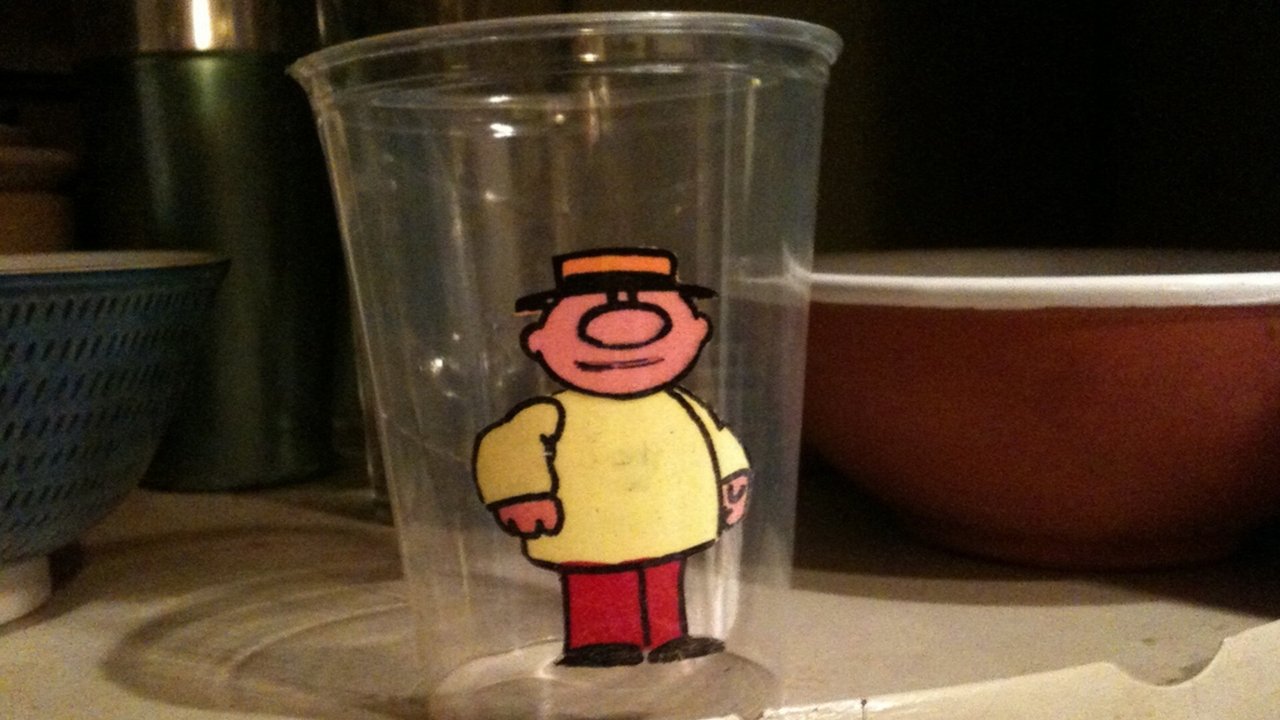
Teeny Little Super Guy
Teeny Little Super Guy was an animated short featured on PBS's Sesame Street. The shorts featured a small animated man, the Teeny Little Super Guy, who resides in a live-action, regular-sized kitchen. Robert W. Morrow described the shorts as including "parables of childhood conflict and striving."
PBS TV Shows
834 shows • Page 33 of 42

Teeny Little Super Guy
Teeny Little Super Guy was an animated short featured on PBS's Sesame Street. The shorts featured a small animated man, the Teeny Little Super Guy, who resides in a live-action, regular-sized kitchen. Robert W. Morrow described the shorts as including "parables of childhood conflict and striving."
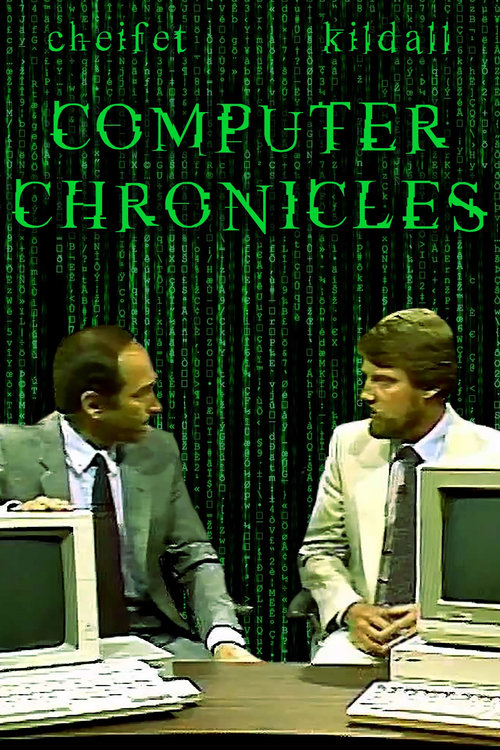
Computer Chronicles
The Computer Chronicles was an American television series, broadcast during 1981-2002 on Public Broadcasting Service public television, which documented the rise of the personal computer from its infancy to the immense market at the turn of the 21st century. The series was created in the Fall of 1981, by Stewart Cheifet, then the station manager of the College of San Mateo's KCSM-TV, initially broadcast as a local weekly series. Jim Warren was its founding host for its 1981-1982 season. It aired continuously from 1981 to 2002 with Cheifet co-hosting most of its later seasons. Gary Kildall served as co-host for six years providing insights and commentary on products as well as discussions on the future of the ever-expanding personal computer sphere.
Newton's Apple
Newton's Apple is an American educational television program produced and developed by KTCA, and distributed to PBS stations in the United States that ran from 1983 to 1999. The show's title is based on the rumor of Isaac Newton sitting under a tree and an apple falling near him—or, more popularly, on his head—prompting him to ponder what makes things fall, leading to the development of his theory of gravitation. The show was produced by Twin Cities Public Television. For most of the run, the show's theme song was Ruckzuck by Kraftwerk, later remixed by Absolute Music. Later episodes of the show featured an original song. An occasional short feature appeared called "Science of the Rich and Famous" in which celebrities appeared to explain a science principle.
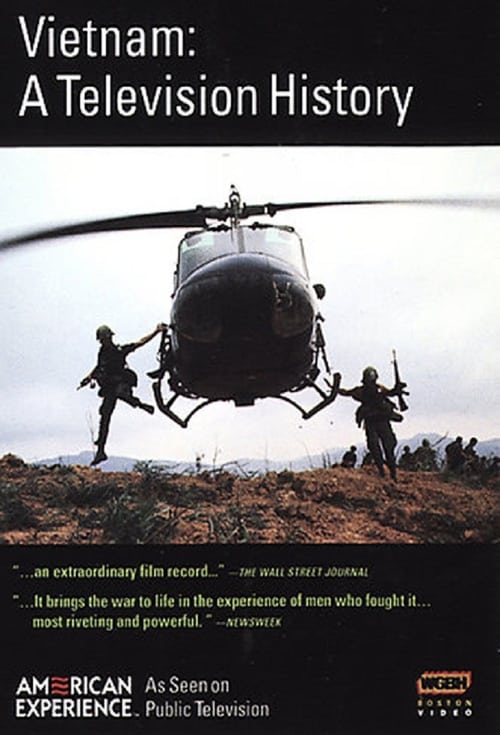
Vietnam: A Television History
A six-year project from conception to completion, "Vietnam: A Television History" carefully analyzes the costs and consequences of a controversial but intriguing war. From the first hour through the last, the series provides a detailed visual and oral account of the war that changed a generation and continues to color American thinking on many military and foreign policy issues.

War
This series of seven one-hour films examines the nature, evolution and consequences of modern warfare. Filmed in ten countries, on two oceans, and with the co-operation of the armed forces of six nations, War features interviews with top-level NATO and Soviet military leaders and strategists, eminent historians and other professional observers of combat. Drawing as well on film and picture archives worldwide, with footage of important battlefields on three continents, this documentary series argues that war, an institution invented to settle disputes between nations, no longer serves its purpose. It concludes that nations must find other ways to resolve their differences. The on-camera host for the War series is Gwynne Dyer, Canadian international affairs analyst and military historian.
Don't Look Now!
Don't Look Now is an American national children's sketch comedy show produced for PBS by WGBH-TV in Boston, Massachusetts, and created by Geoffrey Darby and Roger Price. It is a clone of their program for CTV and Nickelodeon, You Can't Do That on Television.
0Faces of Culture
Faces of Culture, an introductory cultural anthropology course, is a provocative study of the structure and process of culture. This telecourse features dramatic and unique film footage from around the world, embracing cultures from all continents, highlighting major lifestyles, and illustrating human adaptation to environment from the beginnings of the human species to the present. Faces of Culture focuses on the thesis that every society is based on an integrated culture that satisfies human needs and facilitates survival. The course also explores the ways in which our own culture fits into the broad range of human possibilities.
Reading Rainbow
Journey to exciting places and build a lasting connection with your favorite books. Each episode centers on a theme from a book, or other children's literature, which is explored through a number of segments or stories.
Sewing with Nancy
Sewing with Nancy is an American television show about sewing, hosted by Nancy Zieman. It made its debut on the now-defunct Satellite Program Network in September 1982. Later the 1980s, September 1, 1982 PBS began airing the series, which is distributed by NETA. As of 2011, the show airs on 89% of Public Television stations in the United States. It is the longest-running sewing series in the history of North American television. Sewing with Nancy is co-produced by Wisconsin Public Television at Vilas Hall on the University of Wisconsin campus in Madison. Zieman has Bell's palsy on one side of her face and talked about the condition on an episode in 2011.

Frontline
Since it began in 1983, Frontline has been airing public-affairs documentaries that explore a wide scope of the complex human experience. Frontline's goal is to extend the impact of the documentary beyond its initial broadcast by serving as a catalyst for change.
The Joy of Painting
The Joy of Painting was an American television show hosted by painter Bob Ross that taught its viewers techniques for landscape oil painting. Although Ross could complete a painting in half an hour, the intent of the show was not to teach viewers "speed painting". Rather, he intended for viewers to learn certain techniques within the time that the show was allotted. The show began on January 11, 1983, and lasted until May 17, 1994, a year before Ross' death.
 0
0Powerhouse
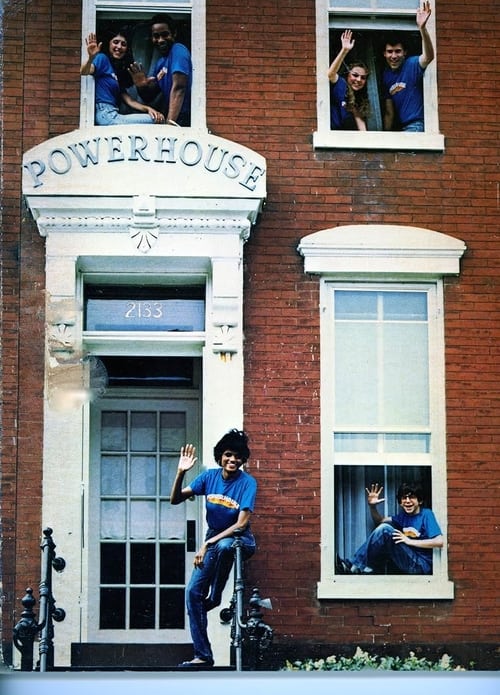
Powerhouse is a United States television series produced by the Educational Film Center at Northern Virginia ETV and aired on PBS for 16 episodes in 1982. It billed itself as "a 16-part series for young people and their families," with the target audience being primarily preteens and teenagers, and was widely praised by educational groups. The series was later rerun by Nickelodeon in the mid-1980s.
Nature
Consistently stunning documentaries transport viewers to far-flung locations ranging from the torrid African plains to the chilly splendours of icy Antarctica. The show's primary focus is on animals and ecosystems around the world. A comic book based on the show, meant to be used an as educational tool for kids, was briefly distributed to museums and schools at no cost in the mid-2000s.
Wild America
Wild America is a documentary television series that focuses on the wild animals and wild lands of North America. By the mid-1970s, Marty Stouffer had put together several full length documentaries. At this time, he approached the programming managers at Public Broadcasting Service about a half-hour-long wildlife show, the first to focus exclusively upon the flora and fauna of North America. PBS signed for the rights to broadcast Marty Stouffer's show Wild America in 1982. The show went on to become one of the most popular aired by PBS, renowned for its unflinching portrayal of nature, as well as its extensive use of film techniques such as slow motion and close-ups. Stouffer earned $135,000 per show from PBS. The show's production ran from 1982 to 1994. The series is no longer on PBS; reruns still air in syndication on commercial television through much of the United States. In 1997, Warner Brothers released a full-length feature film entitled Wild America, which was based loosely on the biographical story of Marty Stouffer and his brothers, Mark and Marshall.
Creativity with Bill Moyers
Journalist Bill Moyers examines various forms of creative expression by interviewing noted artists and performers regarding their influences and inspiration, and looking at unusual outlets for the creative impulse.
 0
0A Walk Through the 20th Century With Bill Moyers
Exploring major events, personalities, and social customs that shaped the century, to rediscover the vivacity of the past. The first episode aired in 1982 on the short-lived CBS Cable network; the remaining episodes aired in 1984 on PBS.
 0
0Give & Take
A sequel series to 'Trade Offs' 1982
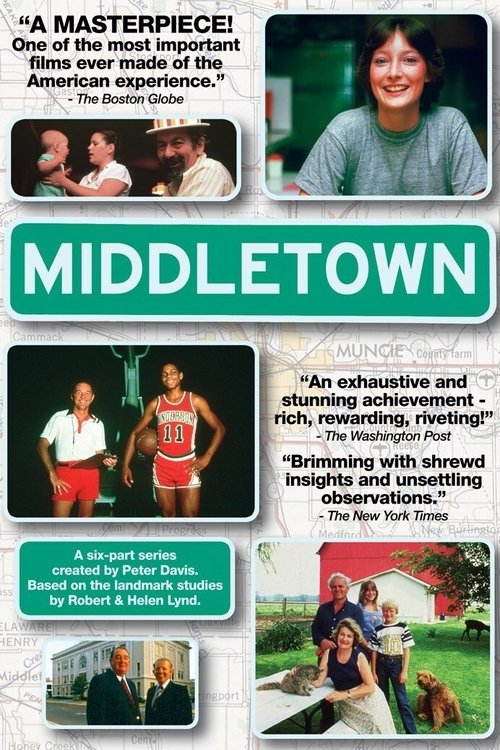
Middletown
Six-part documentary on the city of Muncie, Indiana - nicknamed "Middletown" after a study in the 1920s deemed it representative of middle America. The series finds that amid the great ...
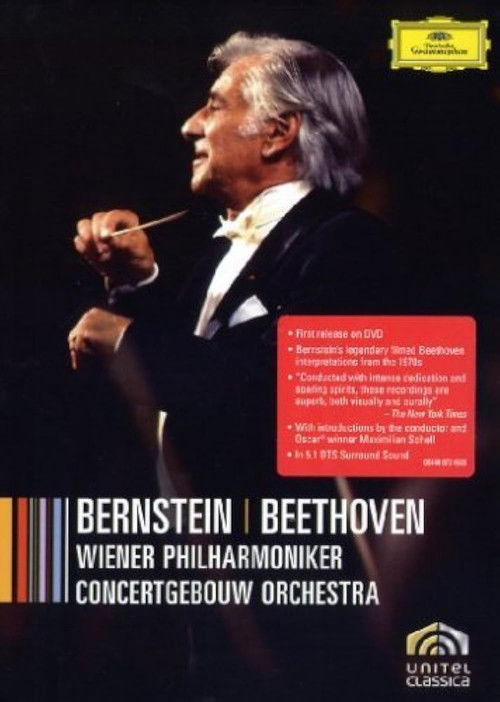
Bernstein/Beethoven
A music miniseries, filmed largely on location in Vienna and Germany, not only featuring Bernstein but also, noted actor Maximilian Schell, who not only provided commentary on Beethoven, but read from his letters. The miniseries contains performances of all of Beethoven's symphonies as well as several overtures, a string quartet that Bernstein re-orchestrated for the entire string section of the Vienna Philharmonic, and the Missa Solemnis, all conducted by Bernstein. It also contains commentary about the music by Leonard Bernstein.
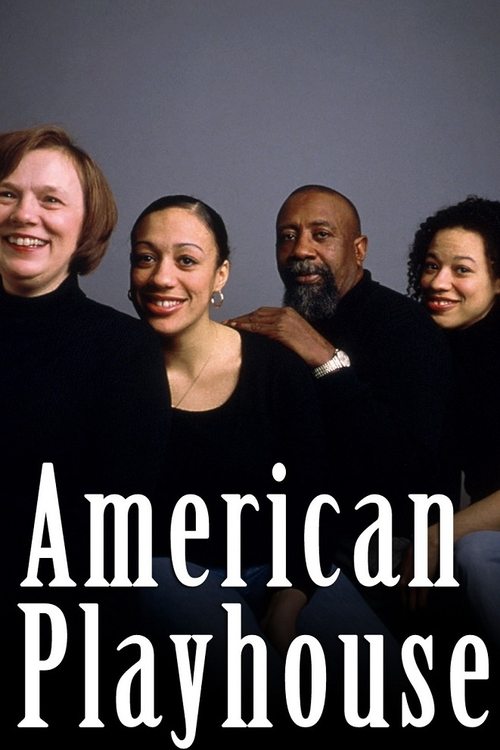
American Playhouse
American Playhouse is an anthology television series periodically broadcast by Public Broadcasting Service in the United States.